If you’ve ever had your space heater kick on just in time to stop your pipes from freezing, or your coffee maker shut off automatically after brewing a perfect pot, you’ve relied on a small, unassuming component: the bimetal thermostat. As a supplier that’s spent over a decade engineering and delivering these components to industries ranging from residential appliances to commercial HVAC systems, I’ve learned that the most common mistake engineers and product designers make isn’t choosing the wrong size or voltage—it’s underestimating the strict environmental conditions that dictate how well a bimetal thermostat performs, and how long it lasts. Bimetal Thermostats
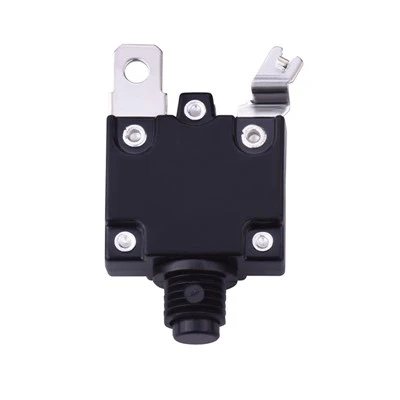
At its core, a bimetal thermostat works on a simple principle: two thin metal strips with different coefficients of thermal expansion are fused together into a single strip or disc. When exposed to temperature changes, one metal expands faster than the other, causing the assembly to bend. That bending triggers a mechanical switch that turns a device on or off. But that delicate balance of metals isn’t foolproof. The conditions your thermostat operates in—from extreme temperatures to humidity, vibration, and even exposure to corrosive materials—will make or break its reliability. Over the years, I’ve seen first-hand how a small oversight in environmental requirements can lead to millions in product recalls, frustrated customers, and a damaged reputation for a brand. Let’s break down the key environmental factors that we test every single thermostat for, and why they matter.
First, and most obvious, is the operating temperature range. This isn’t just about the high end—many people forget that thermostats have a low-temperature limit too. Residential space heaters, for example, might be exposed to temperatures as low as -40°F in a Minnesota basement during winter, while operating at up to 150°F when running. If a thermostat is rated for only -20°F, the bimetal strip won’t bend correctly at the low end. It might fail to trigger when the temperature drops, leading to frozen pipes, or it might trigger incorrectly, cycling the heater on and off too frequently. For industrial equipment, like a kiln’s temperature control, the range is even wider: some applications require thermostats that can handle up to 1,000°F, while still working at -50°F for outdoor mining or agricultural equipment.
But here’s the catch: the operating temperature range isn’t just a static number. It’s affected by what we call thermal cycling. Every time the thermostat turns on or off, the bimetal strip is heated and cooled rapidly. Over thousands of cycles—sometimes hundreds of thousands—this thermal stress can cause the bond between the two metals to weaken, or the strip to warp permanently. A customer once came to us with a batch of thermostats that were failing after just 6 months of use in a commercial oven. We tested them and found they were rated for 50,000 cycles, but the oven was cycling 20 times a day, totaling 3,600 cycles a month, which is more than enough to push them past their limit. The fix? We swapped in thermostats rated for 200,000 cycles, and they’ve run without a hitch ever since. That’s why we always work with our customers to not just give them a temperature range, but to ask about how often their device cycles, to make sure we match the thermostat to the application.
Next, humidity and moisture resistance. Most thermostats aren’t designed to be submerged in water, but even high levels of humidity can cause problems. When the bimetal strip’s surface is exposed to moisture, especially in environments like bathrooms, outdoor AC units, or commercial laundry rooms, corrosion can set in. Corrosion on the metal strip changes its weight and thickness, which alters how it bends when heated. Over time, that can throw off the temperature calibration, so the thermostat stops triggering at the correct point. We’ve also seen cases where moisture gets into the switch contacts, causing them to corrode and fail to make a connection, so the device never turns on. For applications that are exposed to high humidity, we use corrosion-resistant metal coatings, like nickel or tin, and hermetically seal the switch assembly to keep moisture out. For even harsher environments, like marine equipment, we’ll use stainless steel for the entire bimetal strip, which can handle saltwater exposure without corroding.
Vibration and mechanical shock are another often-overlooked environmental factor. Think about the thermostat in a car engine, or in a construction vehicle that’s running on a job site. Those machines vibrate constantly, and if the thermostat isn’t engineered to handle that vibration, the switch contacts can become loose, or the bimetal strip can shift out of alignment. I remember a time when we supplied thermostats to a manufacturer of portable generators. Their initial design didn’t include vibration testing, and after just a few weeks of use, 15% of the thermostats were failing. The problem was that the bimetal disc was mounted with simple screws, and the constant vibration was loosening the screws, shifting the disc, and throwing off the calibration. We redesigned the mounting to use a crimped steel housing that holds the disc firmly in place, and added a rubber dampener to absorb vibration. That fixed the issue, and the manufacturer has been a repeat customer ever since. For applications with high vibration, we also test our thermostats by shaking them at different frequencies and amplitudes for hours, to make sure they can handle the same vibration they’ll face in the field.
Exposure to corrosive gases and chemicals is another big one, especially for industrial applications. A chemical plant, for example, might have fumes that are acidic or alkaline, which can eat away at the thermostat’s components. Even things like paint fumes, or exhaust from a garage, can be corrosive over time. If the bimetal strip is exposed to these gases, the corrosion we talked about earlier happens much faster. We once had a customer in the food processing industry who was using standard thermostats in their cooking equipment. They were working with high levels of steam and food acids, and the thermostats were failing within a year. We switched them to thermostats with a special polymer coating that resists food acids and steam, and they’ve had no issues since. For applications that are exposed to more aggressive chemicals, like semiconductor manufacturing, we use materials like Inconel or Hastelloy for the bimetal strip, which are highly resistant to corrosion from even harsh chemicals.
Temperature hysteresis is closely tied to environmental conditions, and it’s a term we use a lot in our discussions with customers. Hysteresis is the difference between the temperature when the thermostat triggers to turn a device on, and the temperature when it triggers to turn it off. For example, a thermostat might turn a heater on at 60°F, and off at 65°F, so the hysteresis is 5°F. The size of the hysteresis is affected by environmental factors, like the rate at which the temperature is changing, and the ambient conditions around the thermostat. If a thermostat is in a drafty area, the air temperature around it can change much faster than the actual temperature of the device it’s controlling, which can cause the hysteresis to be too small, leading to short cycling, or too large, leading to inconsistent temperature control. We work with our customers to calculate the ideal hysteresis based on their application’s environment, making sure it’s not too narrow or too wide for their needs.
It’s also important to note that environmental requirements aren’t one-size-fits-all. A thermostat for a residential air conditioner is going to have very different requirements than one for a satellite component, which operates in a vacuum and extreme temperature fluctuations. For satellite applications, thermostats have to handle temperatures from -200°F to 500°F, and also handle the vacuum environment, which can cause outgassing of materials inside the thermostat. We have a special line of vacuum-rated thermostats that use high-temperature, low-outgassing materials to prevent that. On the other end of the spectrum, a thermostat for a space heater in a home has to be cost-effective, but still reliable, so we balance the environmental requirements with the application’s needs, making sure the thermostat works without adding unnecessary cost.
As a supplier, our job isn’t just to ship a part that fits the dimensions and voltage of a customer’s device. It’s to understand the environment that the device will operate in, and engineer a bimetal thermostat that can perform reliably in that environment, for the life of the product. Over the years, we’ve learned that even small details—like the type of seal we use, the material of the bimetal strip, the calibration of the hysteresis—can make a huge difference in how well a thermostat works in the real world. We test every thermostat we make in our in-house environmental chamber, putting them through temperature cycling, humidity exposure, vibration, and corrosion tests, to make sure they meet our own high standards before they ever leave our facility.
If you’re an engineer, product designer, or procurement manager working on a project that uses bimetal thermostats, don’t leave the environmental requirements to guesswork. Too many brands have learned the hard way that cutting corners here leads to costly failures and unhappy customers. At our company, we have decades of experience working with all kinds of applications, from small consumer appliances to large industrial equipment. We take the time to ask the right questions about your operating environment, your temperature range, cycling rate, and exposure to moisture or chemicals, and we’ll help you find the right bimetal thermostat that meets your needs, on time and on budget.
Bimetallic Strips Whether you’re designing a new line of home appliances, industrial machinery, or outdoor equipment, getting the environmental requirements for your bimetal thermostat right is crucial for your product’s success. If you’re ready to discuss your project, and find out how our thermostats can help your product perform reliably in even the harshest conditions, we’re here to help. Reach out to us to start a conversation about your specific needs, and let’s build a solution that works for you.
- ASHRAE Handbook – HVAC Applications, American Society of Heating, Refrigerating and Air-Conditioning Engineers, 2023.
- “Bimetallic Thermostats: Design, Testing, and Application,” National Institute of Standards and Technology (NIST) Technical Note 197, 2021.
- Corrosion Resistance of Metal Alloys for Industrial Thermostat Components, International Copper Association, 2022.
- Environmental Testing for Electronic Components, IPC-CC-830, Association Connecting Electronics Industries, 2020.
- Thermal Cycling Effects on Bimetallic Switch Performance, Journal of Electronic Materials, Vol. 50, No. 6, 2021, pp. 3214-3222.
Yueqing Ganen Electronic Technology Co., Ltd.
As one of the most professional bimetal thermostats manufacturers and suppliers in China, we also support customized service. Please feel free to wholesale advanced bimetal thermostats in stock here from our factory. Welcome to contact us for quotation.
Address: No.6 yonghe 3rd Road, Chengdong Industrial Functional Zone, Chengdong Street, Yueqing City, Wenzhou City, Zhejiang Province, China.
E-mail: daiaohui@163.com
WebSite: https://www.ganensj.com/
