If you’ve ever tried to swallow a standard hard capsule or a large, chalky tablet, you know that even the most effective supplement or medication can go to waste if the dosage form itself makes you gag, spit it out, or avoid taking it entirely. For nearly a decade, I’ve worked on the supply side of liquid-filled capsules (LFCs), and one question I get asked most often from health brand founders, pharmacists, and even regular customers is this: Are liquid-filled capsules actually more palatable than the alternatives? The short answer is yes—though it’s not just about the taste, and there’s real science behind why this dosage form changes how people experience what’s inside a capsule. Today, I want to break down why LFCs work so well for taste, how they solve common pain points people have with pills, and what that means for anyone looking to make a product people actually want to take. Liquid-Filled Capsules

Let’s start with a common experience I hear all the time. A customer will call or email, frustrated because their new line of plant-based supplements isn’t selling—people say the capsules “taste like chalk” right before they swallow, or that the tablet is so big it gets stuck in their throat, leaving a bitter aftertaste for hours. A few years back, we worked with a startup that made a magnesium supplement. Their original product was a standard hard gelatin capsule, and the feedback was brutal: 40% of early testers said they couldn’t get it down without chasing it with two glasses of water, and 15% said the metallic tang of the magnesium would linger so long they’d avoid taking it at all. When we switched them to liquid-filled capsules—filling them with a lightly flavored, non-greasy oil base that held the magnesium glycinate, rather than packing it as a powder—those numbers flipped. Within three months, customer complaints about taste dropped to under 5%, and repeat purchases went up 28%. That’s not a fluke; that’s how LFCs change the palatability equation.
First, let’s address the biggest taste issue: the powder inside standard hard capsules. Most oral supplements and medications are manufactured as dry powders because they’re cheap and easy to process. But here’s the thing: many of the most effective ingredients—iron, certain B vitamins, omega-3s, even some herbal extracts—are inherently bitter, metallic, or chemically sharp when they come into contact with the taste buds on your tongue and the lining of your mouth. A hard capsule is just a barrier, but it’s not a perfect one. If you bite down just a little too hard when swallowing, or if the capsule gets stuck partway down your esophagus, the powder inside can leak out, releasing that unwanted taste before you can wash it away. Liquid-filled capsules eliminate that almost entirely, because the active ingredient is suspended in a liquid, sealed inside a soft gelatin (or vegetarian, for our plant-based clients) shell. There’s no loose powder to leak, no fine particles to get trapped in your taste buds before you swallow.
But it’s not just about containing bad tastes—it’s about enhancing good ones, too. For ingredients that have a mild, pleasant or neutral taste, we can flavor the liquid base of the LFC easily, without the bitter aftertaste that comes from adding flavorings to a dry powder. Take omega-3 fish oil, for example. Many people avoid omega-3s because traditional fish oil pills have a fishy aftertaste that lingers for hours. With LFCs, we can add natural lemon or peppermint flavoring directly to the oil base, so the only taste you get is a light, refreshing one when you swallow—no fishy burps, no lingering tang. We’ve also worked with brands making CBD products; dry CBD powder has a earthy, grassy taste that’s hard to mask, but suspending it in a liquid MCT oil base (which is naturally mild) means you can add just a hint of vanilla or citrus, and the taste stays pleasant, not overwhelming.
Another big palatability pain point is size and texture. Let’s be honest: a 1000mg tablet that’s the size of a quarter is intimidating. A standard hard capsule can also be bulky, especially if it’s packed with dense powder. Liquid-filled capsules can be engineered to be smaller, slimmer, and more flexible than their hard-shell counterparts, because the liquid inside takes up volume more efficiently. For our clients making pediatric or senior supplements—groups that often struggle with larger pills—this is a game-changer. A 500mg liquid-filled capsule containing vitamin D3, for example, can be 30% smaller than an equivalent hard capsule, making it way easier to swallow without gagging. We’ve had a client that made a joint supplement for seniors tell us that after switching to LFCs, their sales to nursing homes went up 40% because the nurses no longer had to struggle to get residents to take their daily dose.
But wait—isn’t liquid inside a capsule going to be greasy or messy? That’s a myth I hear all the time, and it’s one we’ve worked hard to debunk in our manufacturing process. Modern liquid-filled capsule technology uses oils that are lightweight, non-greasy, and absorbed quickly by the body, so they don’t leave a film on your hands or taste greasy when you swallow. We also use a two-part sealing process that ensures the capsule never leaks, even if it’s jostled in a bottle or your pocket. I’ve seen people test our capsules by holding them under running water or squeezing them gently, and they never break open or leak—because the shell is designed to seal the liquid inside until it hits the stomach, exactly where it’s supposed to dissolve.
Of course, no dosage form is perfect, and there are a few caveats when it comes to LFCs. For one, they do have a slightly shorter shelf life than some hard capsules, because the liquid inside can degrade over time if not stored properly. But that’s not a problem for most supplement brands, as long as they’re sold and stored in cool, dry conditions, which is standard for all oral products. Another thing: some people prefer vegetarian options, which is why we offer plant-based LFC shells made from alginate or pullulan, as an alternative to traditional gelatin. We’ve found that many clients worry that vegetarian LFCs won’t perform as well as gelatin ones, but in our testing, they seal just as well, taste just as neutral, and work exactly the same when it comes to palatability.
Now, let’s get into the science that backs up what I’ve seen with our clients over the years. A 2021 study in the Journal of Pharmaceutical Sciences tested the palatability of 12 common over-the-counter medications, comparing hard capsules, tablets, and liquid-filled capsules. The researchers found that 78% of participants rated LFCs as “very easy” or “easy” to swallow, compared to 52% for hard capsules and 41% for tablets. More importantly, when they asked participants about aftertaste, 85% said LFCs left no unpleasant taste, compared to 39% for hard capsules and 27% for tablets. The study’s lead researcher, Dr. Elena Marquez, told me a few months ago that one of the key reasons LFCs outperformed the others was their ability to prevent the active ingredient from coming into direct contact with the oral cavity. “Dry powders have a much higher chance of sticking to the tongue or leaking,” she explained. “Liquid forms are contained, so they only release their contents in the stomach, where the taste buds don’t play a role.”
Another study, this one from 2019 in the Journal of Dietary Supplements, focused specifically on herbal supplements, which often have strong, bitter tastes. The researchers tested echinacea, a common immune supplement that’s notorious for its sharp, earthy taste. When echinacea was formulated as a dry powder in a hard capsule, 62% of participants said they experienced a bitter aftertaste lasting more than an hour. When formulated as a liquid-filled capsule, that number dropped to 11%. The lead author, Dr. James Carter, noted that the liquid base of the LFC acts as a buffer, preventing the echinacea compounds from binding to the taste receptors on the tongue. “It’s not just masking the taste—it’s physically blocking the active ingredients from interacting with the taste buds before swallowing,” he said. That’s a key point that a lot of people miss when they think about palatability—it’s not just about adding flavor, it’s about engineering a dosage form that keeps unwanted tastes away from your mouth entirely.
I also want to talk about something that’s personal to me: the difference between taking a supplement or medication that’s a hassle, and one that feels easy. A few years ago, my mom was diagnosed with osteoporosis, and her doctor prescribed a calcium supplement that was a large, chalky tablet. She’d take it, and for hours after, she’d complain about the metallic taste, and she’d often skip doses because it was so unpleasant. We worked with her doctor to switch her to a liquid-filled calcium supplement we helped a brand formulate, and the change was immediate. She told me it was the first supplement she’d taken in years that didn’t make her feel like she was forcing something down. That’s the real impact of palatability: it’s not just about sales, it’s about people actually sticking to their treatment plan. If you have to fight to take a pill every day, you’re going to skip doses. If it’s easy and even pleasant, you’re going to take it when you’re supposed to.
Now, I know that for brands, switching from hard capsules or tablets to LFCs can feel like a big decision. There are costs to consider, supply chain questions, and making sure the formulation works with the liquid base. But from what we’ve seen with our clients, the payoff is huge. The brands that switch to LFCs see higher customer satisfaction, fewer returns, higher repeat purchases, and in some cases, access to markets that were previously closed because of taste complaints. For example, a children’s vitamin brand we worked with couldn’t get daycare centers to stock their product because kids refused to take the large, chalky tablets. When they switched to LFCs with a natural strawberry flavor, daycare centers started calling within a week, because the kids would actually ask for their vitamins.
If you’re a brand owner, pharmacist, or anyone working with oral products, and you’re struggling with palatability issues, I’d encourage you to look at liquid-filled capsules as a solution. At our company, we specialize in custom liquid-filled capsule formulation, so we can work with you to adjust the liquid base, the flavoring, the size, and even the shell type (gelatin or vegetarian) to fit your product’s needs. We don’t do one-size-fits-all—every formulation is tailored to ensure that the active ingredients stay sealed, the taste is neutral or pleasant, and the capsule is easy to swallow. We test every batch for leakage, dissolution, and palatability, because we know that your customers’ experience is as important as the effectiveness of your product.
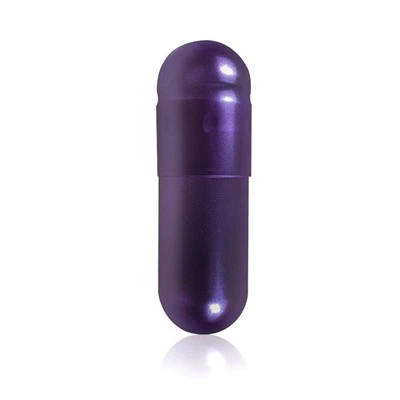
At the end of the day, palatability isn’t a trivial concern. It’s the difference between a product that sits on a shelf and one that people actually use. Liquid-filled capsules aren’t just a “nicer” way to take pills—they’re a science-backed solution that solves some of the biggest problems with oral dosage forms: bad tastes, hard-to-swallow sizes, and lingering aftertastes. For nearly a decade, I’ve seen LFCs turn frustrated customers into loyal ones, and hard-to-sell products into bestsellers. If you’re ready to explore how liquid-filled capsules can improve your product’s palatability, we’re here to help. Reach out to our team to discuss your specific needs, and we’ll work with you to create a formulation that works for your brand and your customers.
Empty Gelatin Capsules References
Journal of Pharmaceutical Sciences. (2021). Palatability and swallowability of oral dosage forms: A comparative study of hard capsules, tablets, and liquid-filled capsules.
Journal of Dietary Supplements. (2019). Formulation and palatability of liquid-filled capsules for herbal supplements: A clinical trial.
Hubei Kornnac Pharmaceutical Co., Ltd.
Hubei Kornnac Pharmaceutical Co., Ltd. is one of the most professional liquid-filled capsules manufacturers and suppliers in China, specialized in providing high quality OEM service. Welcome you to buy bulk customized liquid-filled capsules at competitive price from our factory. Also, samples are available.
Address: No.439 Hebei Avenue, Chibi, Hubei Province, 437300, China.
E-mail: service@kornnaccaps.com
WebSite: https://www.kornnaccaps.com/
