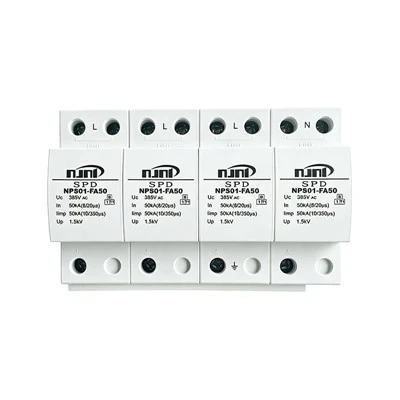
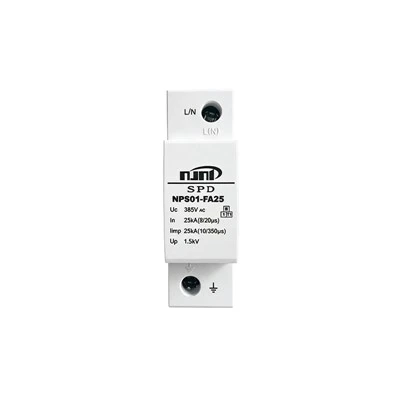
Hey everyone, it’s Jake here, from the team that works on surge protective devices day in and day out. I get so many DMs and emails a week that start with the same question: “How much does a T1 15KA surge protective device cost?” And honestly? I don’t blame you. If you’re in charge of keeping your electrical systems, equipment, or even a whole building from getting fried by a random power surge, pricing is probably one of the first things you Google. But here’s the thing—this isn’t like buying a random phone charger where you can just pick the first one under $20. T1 15KA SPDs are specific, high-stakes gear, so there’s a lot more that goes into the price tag than you might think. Let me break this down like I would for a contractor or facilities manager who just texted me at 9 PM panicking about their next project. First off, let’s make sure we’re on the same page about what a T1 15KA SPD even is, because there’s a lot of mixing up ratings out there. T1 classification is about the highest surge current handling—these are the ones you install at the main electrical service entrance, right before the power splits off to your building. That’s the first line of defense against those massive lightning strikes or grid switching surges that can take out your servers, HVAC, or even the whole office floor. The 15KA number? That’s the maximum surge current it can safely discharge in kiloamperes. Not all T1 SPDs hit that 15KA mark, so if you see one labeled T1 but only rated for 10KA, that’s a different product entirely—and probably cheaper for a reason. Now, let’s get to the numbers, but I have to warn you: they’re not set in stone, and that’s a good thing. Let’s start with the basic, entry-level units. These are the ones that work for small to mid-sized projects—like a 5-unit strip mall, a small retail store, or a remote cabin that doesn’t have super sensitive, high-value equipment. Entry-level T1 15KA SPDs typically run anywhere from $80 to $150 each. Wait, that’s a big gap, right? Why? Because entry-level doesn’t mean “cheap garbage.” Some manufacturers use cheaper housing materials that aren’t UV-resistant if you’re installing it outdoors, which can cut the lifespan short by years. Others might skimp on internal components—like the metal oxide varistors (MOVs) that actually do the surge catching. The cheaper MOVs might handle 15KA once, but if you have a big surge, they wear out fast, and then you have to replace the whole unit way sooner. That’s a hidden cost most people don’t think about. Then there’s the mid-range tier. This is where most of our clients fall—offices with server rooms, warehouses with automated equipment, multi-family buildings with electric car chargers, or schools that can’t afford downtime. Mid-range T1 15KA SPDs usually cost between $160 and $350 each. What do you get for that extra cash? Better build quality: outdoor-rated enclosures that can handle rain, snow, extreme heat or cold (we have clients in Arizona and Alaska, so this matters), and internal components that are tested to last for thousands of surge events, not just a few. A lot of mid-range units also have visual status indicators—little lights or labels that tell you at a glance if the SPD is still working, no need to crack open the panel every month. Some even have remote monitoring options, so your facility manager gets an alert on their phone if the SPD starts to fail, way before it stops working. That’s a game-changer for avoiding unexpected downtime. And then there’s the premium tier—these are the heavy-duty workhorses for data centers, hospitals, manufacturing plants with sensitive robotics, or other critical facilities where a surge could cost tens of thousands of dollars in lost revenue or damaged gear. Premium T1 15KA SPDs can range from $360 up to $700 or more per unit. Why so pricy? A few reasons. First, independent testing. Premium units go through third-party testing by labs like UL or IEC to make sure they actually meet the 15KA T1 rating—no cutting corners. Some even have higher ratings than just 15KA, like a 20KA let-through current that’s even more protective for super sensitive equipment. They also have fail-safe mechanisms, so if the internal components wear out, the SPD doesn’t short-circuit and become a fire hazard (that’s a big one I’ve seen people overlook—bad SPDs can cause fires, not prevent them). Some premium units also work with specific monitoring systems used by big corporations, so you can integrate them into your existing building management software. Now, before you go and think “wow, that’s way more expensive than I budgeted,” let’s talk about the other factors that change the total cost, because pricing isn’t just per unit. First, quantity. If you need 5 units for a small project, that’s one price. If you need 50 units for a new office campus, we can work out a bulk discount that brings the per-unit cost down. We’ve had clients who needed 200 units for a multi-phase construction project, and we were able to cut the per-unit price by almost 20% because of the volume. That’s why it’s always worth asking for a quote with your exact number of units—we won’t lowball you, but we do give fair discounts for bigger orders. Then there’s installation requirements. Wait, hold on—this is a huge one that a lot of people forget to factor in when comparing prices. The SPD itself is just the device; you need to wire it into your electrical panel, right? If you’re a licensed electrician who does this every day, you might be able to install it yourself, and that cost is separate. But if you need a professional to come do it, that adds anywhere from $150 to $400 per hour, depending on where you are and how hard the panel is to access. Some vendors will quote you a “total installed price,” but others will just give you the unit cost. We always tell our clients to ask for both—unit cost plus installation estimate—because a $80 unit that takes 4 hours to wire might end up being way more expensive than a $180 unit that only takes an hour, depending on your electrician’s rates. Also, where you’re installing the SPD matters. Indoor vs. outdoor: outdoor units need weatherproof enclosures, which adds $20 to $50 to the cost of the unit. Some T1 15KA SPDs are designed specifically for surface mounting, while others fit into standard panel slots—if your panel only takes a specific style, that can change which units you can get, and their price. Another big one: certifications. If you’re working on a project that needs to meet certain industry standards—like healthcare facilities that have to comply with NFPA 70, or data centers that need UL 1449 certification for surge protection—you can’t just buy any off-brand unit that says T1 15KA on it. Those certified units are a little more expensive, but they’re non-negotiable for code compliance, and trying to cut corners here can lead to fines or failed inspections. I’ve had clients come to me after buying a cheap SPD from a big box store that said it was T1 rated, only to find out it didn’t pass inspection because it wasn’t third-party tested. They ended up having to throw that unit out and buy a certified one anyway, wasting the initial cheap cost. Now, let’s get real—are there any ways to save money without sacrificing quality? Absolutely. First, don’t overbuy. If you don’t need a premium unit with remote monitoring, don’t pay for it. For a small retail store, a solid mid-range unit will do everything you need, no extra frills. Second, buy from a reputable supplier, not just the cheapest listing on Amazon. Wait, I know Amazon has some T1 15KA SPDs for under $50—don’t buy those. Most of those are untested, off-brand, and might not actually meet the T1 15KA rating. I’ve had so many stories from clients who tried those, had a surge that fried their equipment, and found out the unit couldn’t even discharge 10KA, let alone 15. The few dollars you save upfront is nothing compared to replacing a $10,000 server. Third, ask about compatibility. If you have an existing electrical system that needs a specific size or mounting style, we can recommend units that fit without you having to modify your panel, which saves on installation time and cost. Let me throw in a quick example to make this concrete. Last month, I worked with a general contractor for a 10,000 sq ft warehouse in Texas. They needed 6 T1 15KA SPDs for each of their main service panels, plus they had 3 outdoor electrical disconnects that needed weatherproof units. They initially got a quote from another supplier for entry-level units at $70 each, total $420 for the units, plus $1,200 for installation. When they came to me, I explained that those entry-level units weren’t rated for Texas’ extreme heat (over 100°F most summer months), so they’d only last 2-3 years instead of 10. I quoted them mid-range units at $210 each, total $1,260, and the installation was $900 because the units fit their existing panels so no extra work was needed. Total for mine was $2,160, vs. the other supplier’s $1,620—but 8 years later, when their original units would have failed, theirs were still going strong. They ended up saving way more money long-term by avoiding early replacements and downtime. That’s the kind of math most people don’t do when they just look at the upfront unit price. Now, let’s address a common question I get: why would two T1 15KA SPDs with the same rating have such a price difference? It all comes down to build quality, testing, and reliability. A cheap unit might use low-quality MOVs that degrade over time, even when there’s no surge—so it just stops working after a few years, even if it never handled a big surge. A good unit has MOVs that are tested to maintain their rating for 15+ years, and the whole unit goes through hundreds of surge tests to make sure it actually does what it says. Also, some brands stand behind their products. We offer a 10-year warranty on all our T1 15KA SPDs—if yours fails for any reason, we replace it, no questions asked. That’s worth something too, right? If you buy a cheap unit with a 1-year warranty, that’s a big risk. Let’s wrap this up so it’s not just a bunch of numbers. The short answer: a T1 15KA surge protective device can cost anywhere from $80 to $700, depending on tier, quantity, certifications, installation needs, and additional features. But the longer, more important answer is that the cheapest option isn’t always the best, especially when it comes to protecting your valuable equipment and keeping your operations running. At the end of the day, if your project doesn’t need a premium unit, go mid-range—it’s the sweet spot for most people. If you’re working on a critical facility, splurge on the certified, tested ones. If you’re not sure what you need, don’t guess—reach out and ask. We’ve helped so many clients figure out exactly what they need, without overpaying for features they’ll never use or underbuying and risking downtime. If you have questions about pricing, need a custom quote for your project, or want to talk through what kind of T1 15KA SPD will work best for your space, just connect with our team. We’re here to help you get the right protection at a fair price, no pressure, no confusing fine print. Thanks for reading—hit us up if you need anything! T1 15KA Surge Protective Device
T1+T2 7KA Surge Protective Device References
National Fire Protection Association. (2023). NFPA 70: National Electrical Code.
Underwriters Laboratories. (2022). UL 1449: Standard for Surge Protective Devices.
International Electrotechnical Commission. (2021). IEC 61643-11: Low-voltage surge protective devices – Part 11: Surge protective devices connected to low-voltage power systems – Requirements and test methods.
Nanjing Ningpu Lightning Protection Equipment Manufacturing Co., Ltd.
As one of the most professional T1 15ka surge protective device manufacturers and suppliers in China, we’re featured by quality products and good price. Please rest assured to buy customized T1 15ka surge protective device made in China here from our factory. Also, pricelist is available.
Address: Building 1, No.20 Shengyuan Road, Lishui Economic Development Zone, Nanjing City, Jiangsu Province, China
E-mail: 3796023563@qq.com
WebSite: https://www.npspd.com/
