Hey there! I’m a supplier in the freeze dryer business, and I gotta say, freeze dryers are super cool, especially in the biotech field. So today, I wanna take you through how these nifty machines work in the world of biotech. Freeze Dryer

First off, let’s talk basics. What the heck is freeze drying? Well, it’s a process that removes water from a substance while it’s frozen, through a method called sublimation. In simple terms, instead of the ice turning into liquid water first, it goes straight from a solid (ice) to a gas (vapor). This is a game – changer in biotech because it helps preserve the biological materials in the best possible way.
In the biotech field, we deal with all sorts of delicate stuff, like proteins, enzymes, vaccines, and even living cells. These things are really sensitive to heat, moisture, and oxygen. If you just let them sit around in normal conditions, they can break down, lose their effectiveness, or even die. That’s where freeze dryers come in to save the day.
So, how does the whole process actually work? It’s kinda like a three – step dance.
Step 1: Freezing
The first step is all about freezing the biotech sample. We use a super – cold environment to turn all the water in the sample into ice. And trust me, getting the right freezing conditions is crucial. If we freeze it too fast, the ice crystals can be really small but might also cause damage to the biological structures inside the sample. On the other hand, if we freeze it too slowly, the ice crystals can grow really big and physically damage the cells or proteins.
Most of our freeze dryers have adjustable freezing rates. Our clients in biotech can set the speed according to the type of sample they’re working with. For example, some proteins need a rapid freeze to preserve their structure. So, they’ll set the freeze dryer to quickly drop the temperature. Once the sample reaches the right frozen state, it’s ready for the next step.
Step 2: Primary Drying (Sublimation)
This is where the magic of sublimation happens. Once the sample is frozen, we create a vacuum inside the freeze dryer. A vacuum is basically an area with very low pressure. As we lower the pressure, the ice in the sample starts to turn directly into vapor without going through the liquid phase.
We also supply gentle heat to the sample during this stage. But don’t worry, it’s not like a blowtorch or anything. The heat is just enough to give the ice molecules the energy they need to break free and start sublimating. The vapor that’s created is then removed from the chamber and collected in a condenser. The condenser is like a cold trap. It’s set at an even lower temperature than the sample, so when the vapor hits it, it turns back into ice.
This primary drying stage can take a while, depending on how much water is in the sample and how thick it is. In biotech, we often deal with samples that have very precise requirements. For instance, a vaccine might need to be dried for a specific number of hours to make sure all the excess water is removed without affecting its potency. Our freeze dryers are equipped with sensors and controls so that our biotech customers can monitor and adjust the drying process as needed.
Step 3: Secondary Drying
After the primary drying, there’s still a little bit of water left in the sample. This water is more tightly bound to the biological materials. That’s where the secondary drying comes in.
We increase the temperature slightly during this stage, still keeping it low enough not to damage the sample. The goal is to break the bonds between the remaining water molecules and the biological substances. As the temperature goes up, the water molecules start to move more freely and turn into vapor. We continue to maintain the vacuum and collect this vapor in the condenser just like in the primary drying.
The secondary drying is really important for long – term storage of biotech products. If there’s too much residual moisture in things like enzymes or DNA samples, they can degrade over time. Our freeze dryers are designed to be able to fine – tune this secondary drying process so that our biotech clients get the best results.
Why Freeze Drying Rocks in Biotech
Now that you know how it works, let’s talk about why freeze drying is so great in the biotech field.
One of the biggest advantages is preservation. As I mentioned before, biotech materials are super sensitive. Freeze drying helps keep them stable for a long time. For example, vaccines can be stored at room temperature for longer periods after being freeze – dried. This is a huge deal, especially in parts of the world where it’s hard to keep vaccines refrigerated all the time.
Another pro is that freeze drying maintains the biological activity of the materials. When we use other drying methods like heat drying, it can denature proteins and kill cells. But with freeze drying, since we’re working at low temperatures and using sublimation, the biological structures stay intact. This means that proteins can still do their jobs, and cells can still function when they’re rehydrated later.
It also makes transportation a whole lot easier. Once a biotech product is freeze – dried, it takes up less space and is lighter. This is important because shipping and storing large volumes of liquid samples can be a pain in the neck, not to mention expensive.
Our Freeze Dryers for Biotech
As a freeze dryer supplier, we’ve got a range of products that are perfect for the biotech industry. Our machines are built with high – quality materials to make sure they’re reliable and durable.
We understand that biotech companies have different needs. So, we offer both small – scale freeze dryers for research labs and large – scale ones for production facilities. Our small – scale models are great for when you’re just starting out with a new experiment or testing a small batch of samples. They’re easy to operate and don’t take up too much space.
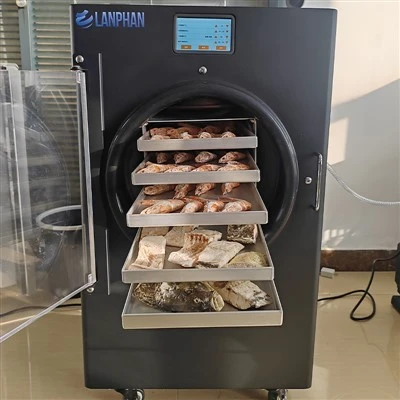
On the other hand, our large – scale freeze dryers are designed for high – volume production. They can handle multiple samples at once and have advanced controls for precise drying. We also provide technical support and training to our clients. That way, they can get the most out of our freeze dryers and ensure that their biotech products are of the highest quality.
Industrial Freeze Dryer If you’re in the biotech field and looking for a freeze dryer, we’d love to talk to you. Whether you’re working on cutting – edge research or mass – producing biotech products, we’ve got the right solutions for you. Contact us to discuss your specific needs and let’s work together to find the perfect freeze dryer for your projects.
References
- "Principles of Freeze – Drying" by Geoffrey G. Briggs.
- "Freeze Drying in the Pharmaceutical and Biotechnology Industries" edited by Fernando J. Franks and David R. Nail.
Henan Lanphan Technology Co., Ltd.
We’re well-known as one of the leading freeze dryer manufacturers and suppliers in China. With abundant experience, we warmly welcome you to buy high quality freeze dryer for sale here from our factory. For price consultation, contact us.
Address: Room 801, East Tower, Xiyuan Square, Zhongyuan District, Zhengzhou City, Henan Province
E-mail: lanphantech@lanphan.com
WebSite: https://www.lanphantech.com/
