If you’ve ever stood on a sailboat at dawn, watching the sun paint the horizon gold while your navigation system and fridge hum softly, you’re relying on something most people don’t spend much time thinking about: the lithium battery charger that keeps all your boat’s critical systems powered. As a supplier of marine lithium battery chargers, I’ve spent years answering questions from captains, charter boat owners, and weekend sailors who’ve either struggled with old lead-acid chargers that failed mid-voyage or are making the switch to lithium for the first time. The marine environment is unforgiving—salt spray, extreme temperature swings, power fluctuations from tides and generators, and the constant vibration of a boat cutting through waves mean standard off-the-shelf chargers simply won’t cut it. Today, I want to walk you through how a marine lithium battery charger actually works, why it’s different from a residential one, and what that means for your time on the water. Lithium Battery Charger
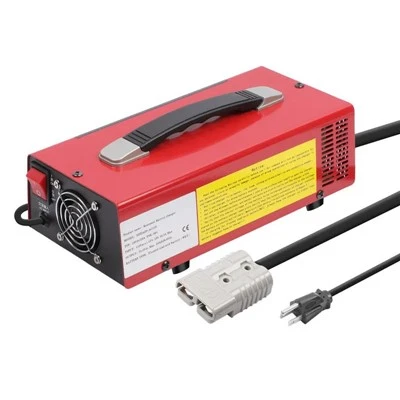
Let’s start with the basics. First, a quick refresher on how lithium batteries themselves work, because a charger’s entire job is tailored to the specific chemistry of the battery it’s paired with. Most marine lithium batteries used today are lithium iron phosphate (LiFePO4), and that’s the type every reputable marine charger is designed for. Unlike old lead-acid batteries, which use a chemical reaction with lead plates and sulfuric acid, LiFePO4 batteries use lithium ions moving between a cathode and anode to store energy. The key here is that lithium batteries are far more precise about their charging needs. Charge them too fast, or with too little or too much voltage, and you can reduce their lifespan drastically—or even create safety risks. That’s where the marine charger’s specialized design comes in.
A marine lithium battery charger isn’t a one-size-fits-all device. Let’s break down its core components, step by step, so you can see why it’s built for life on the water. First, it takes AC power from your boat’s source—whether that’s a shore power cord at the dock, a portable generator, or even the alternator on your engine when you’re underway. The charger’s first job is to convert that incoming alternating current (AC) to direct current (DC), because lithium batteries store and release DC power. But that’s just the start. Residential chargers might stop there, but marine chargers have to handle power that’s often inconsistent: shore power can dip or spike when other boats on the same circuit use their air conditioners, and engine alternators can output wildly varying voltage depending on how fast you’re going. So modern marine chargers have built-in voltage regulators and surge protectors that smooth out that power before it ever touches your batteries. That’s a critical feature I see boat owners underestimate all the time—saltwater and inconsistent power are a bad combination, and a charger that protects your batteries from those fluctuations is non-negotiable.
Once the incoming power is stable, the charger moves into the charging profile phase. This is where the science gets specific, and where marine chargers differ most from residential ones. LiFePO4 batteries have a three-stage charging process, and the best marine chargers are programmed to follow this exactly to maximize battery life and performance. The first stage is bulk charging. When your battery is deeply discharged (say, after a long night of running your navigation lights and GPS), it needs a large amount of power quickly to get back to around 80% capacity. During bulk charge, the charger outputs a consistent, high current—customized for your battery’s amp-hour rating—until the battery voltage hits around 14.4 volts for LiFePO4. At this point, the charger switches to absorption charging, the second stage. Here, it keeps that voltage steady, slowly reducing the current as the battery fills up. This is where the charger makes sure the lithium ions are evenly distributed across the battery cells, rather than just charging the surface. Rushing this stage means you’ll lose capacity over time, so marine chargers often have built-in timers for absorption, too—if the battery reaches its full voltage before the timer runs out, the process moves on, protecting against overcharging.
The third and final stage is float charging. Once the battery is fully charged, the charger drops the voltage to a steady, lower level—around 13.2 volts for LiFePO4—to keep the battery topped off without overloading it. This is especially important for boats that sit at the dock for weeks or months at a time, which is a common scenario for many recreational sailors. Old lead-acid chargers would either overcharge batteries, causing them to corrode and die, or not charge them enough, leading to sulfation. Marine lithium chargers, by contrast, are designed to switch seamlessly into float mode, so you don’t have to unplug your charger at the end of the weekend. That’s a huge time-saver and a big reason so many boat owners make the switch to lithium—it removes the stress of monitoring your batteries during long stays on the water.
But here’s where the marine environment adds layers of complexity most people don’t consider. Boats move, so vibration is constant. A charger that works in a garage might have loose internal parts that rattle apart on rough seas. That’s why every marine lithium charger I supply is built with rugged, vibration-resistant components—soldered circuit boards, heavy-duty casings that can stand up to salt spray, and sealed internal parts to prevent corrosion. Temperature is another big one. On the ocean, temperatures can swing from near freezing at night in the Pacific Northwest to over 100 degrees in the Florida Keys. Lithium batteries are sensitive to extreme temperatures, and so is their charger. A high-quality marine charger will have temperature compensation technology, which adjusts the charging voltage based on the battery’s current temperature. When it’s cold, batteries charge more slowly and require slightly higher voltage; when it’s hot, too much voltage can damage the cells. That’s not a feature you’ll find on a cheap charger, and it’s the difference between a battery that lasts 5 years and one that dies after 2.
Another key function of marine lithium chargers is their ability to integrate with your boat’s existing systems. Most modern sailors have a network of devices: solar panels, wind generators, engine alternators, battery monitors, and even electric trolling motors. A good marine charger is bidirectional, meaning it can not only charge your batteries from shore power or an alternator but also accept power from solar panels. That’s a game-changer for off-grid cruisers—you can charge your batteries during the day with solar and use the charger to manage that power efficiently. Some chargers also communicate with your battery management system (BMS), the small computer that monitors individual cells in your lithium battery. The BMS prevents overvoltage, overcurrent, and overheating, and the charger talks to it to make sure every charge is perfectly calibrated. If there’s an issue with a cell, the charger will even detect it and adjust its charging output to protect the whole battery pack. That level of integration is something standard chargers can’t do, and it’s why marine-specific chargers are worth the investment.
I’ve seen too many boat owners make the mistake of buying a cheap off-the-shelf lithium charger because it’s cheaper, only to end up with a dead battery mid-sail. A few years back, I worked with a captain who was crossing the Atlantic on a 40-foot sailboat. He’d installed a $100 residential lithium charger to save money, and halfway across, a surge from the engine alternator fried the charger. By the time he could get a replacement part from a port in the Azores, he’d spent three days without navigation, communication, or a fridge, putting his entire voyage at risk. That story stuck with me. Marine charging isn’t just about powering your devices—it’s about safety and reliability when you’re miles from shore. The right charger is built to handle the unique stresses of the ocean, and the science behind it is designed to keep your battery and your boat safe.
Let’s also talk about efficiency, because that’s a big win for lithium systems, especially on the water. Lithium batteries can charge at 95% efficiency, compared to around 80% for lead-acid, and a high-quality marine charger adds very little waste. That means more of the power from your shore line, generator, or solar panels goes into your batteries, not into heat. Less heat means longer battery life, and that’s another edge marine chargers have. Cheap chargers run hot, especially when charging at high currents, which can damage both the charger and the battery cells. Marine chargers have built-in thermal management systems that monitor their own temperature and adjust charging current if they get too hot, preventing overheating and extending their own lifespan too.
If you’re still running lead-acid batteries and wondering if switching to lithium is worth it, or if you’re upgrading your existing lithium setup, the charger is just as important as the batteries themselves. I often tell customers that a $500 battery paired with a $100 charger is a bad investment, because you’ll ruin the battery long before its time. A $300 charger paired with a $1,500 battery will give you years of reliable service on the water. That’s not a sales pitch—it’s based on years of working with boat owners and seeing what works.
So, what should you look for when choosing a marine lithium battery charger? First, make sure it’s specifically designed for LiFePO4 chemistry. Chargers made for other types of lithium (like lithium-ion cobalt, used in power tools) have different charging profiles and can damage your battery. Second, check for marine certifications: look for IP ratings (Ingress Protection) that show it’s resistant to water and dust, at least IP65, which means it can handle spray from any direction. Vibration resistance is another must—look for chargers built with MIL-STD certifications, which test for durability in harsh environments. Temperature compensation and BMS communication are non-negotiable too, as are multi-stage charging profiles tailored for marine use. And if you’re planning to go off-grid, look for a bidirectional charger that works with solar and alternators.
At the end of the day, a marine lithium battery charger is a quiet workhorse on your boat. You don’t think about it until it fails, but when it works right, it lets you focus on what matters: the open water, the views, and the peace of mind that your power is reliable. I’ve spent my career building chargers that are tested in the harshest conditions—on rough seas, in extreme heat and cold, on vessels that sail around the world. Every component is designed to handle what the ocean throws at it, because that’s what boat owners deserve.
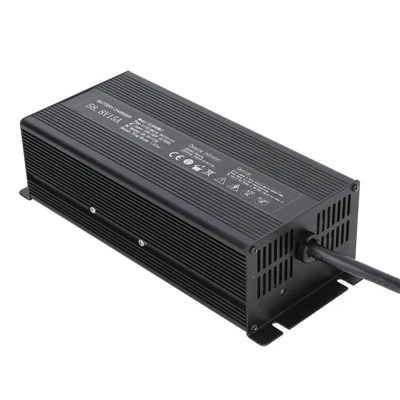
If you’re ready to upgrade your marine charging system, or have questions about which charger is right for your battery setup and sailing style, I’m here to help. Don’t let a faulty charger ruin your next voyage—invest in a system built for the water, not the garage. Reach out to discuss your needs and find the perfect solution for your boat.
Marine Battery Charger References
- Lithium Battery Charging Basics: Marine vs. Residential, National Marine Electronics Association (NMEA) Standards, 2022.
- LiFePO4 Battery Temperature Compensation for Marine Applications, Battery University, Cadex Electronics Inc., 2021.
- Ingress Protection (IP) Ratings for Marine Electronics, International Electrotechnical Commission (IEC) 60529, 2020.
- Bidirectional Charging for Off-Grid Marine Systems, American Boat and Yacht Council (ABYC) Guidelines, 2023.
Huizhou Qiangfeng Power Technology Co., Ltd.
Huizhou Qiangfeng Power Technology Co., Ltd. is one of the most professional lithium battery charger manufacturers and suppliers in China, featured by quality products and good service. We warmly welcome you to buy customized lithium battery charger made in China here from our factory. If you have any enquiry about quotation and free sample, please feel free to email us.
Address: No. 28, Hu’ao Avenue, Shiwan Town, Boluo County, Huizhou City, Guangdong Province
E-mail: Komco@Jinlidianqi.cn
WebSite: https://www.autobatterychargers.com/
