If you’ve ever picked up a bottle of industrial adhesive, a tube of specialty sealant, or a high-performance lubricant for heavy machinery, chances are the product was packaged in a laminated tube. For anyone in the industrial supply space, these tubes aren’t just simple packaging—they’re critical for preserving product integrity, controlling dispensing, and withstanding the harsh conditions many industrial materials face. As a long-standing laminated tube supplier for industrial clients, I’ve walked every step of their manufacturing process hundreds of times, from raw material sorting to the final quality check before a tube leaves our warehouse. Today, I want to pull back the curtain on what goes into making these workhorses of industrial packaging, why each step matters for the products that end up inside them, and how small details make all the difference for industrial applications. Laminated Tube for Industrial

First, let’s talk about why laminated tubes are the go-to choice for industrial use, because that context shapes every decision we make in production. Unlike plastic tubes that can leach chemicals or metal tubes that rust or react with corrosive materials, laminated tubes are built from multiple layered materials, each chosen for a specific job. Most industrial laminated tubes are at least three to five layers thick, with a core polymer layer, an adhesive layer, a barrier layer, and sometimes an outer print layer. For example, a tube holding heavy-duty industrial sealant might use a polyethylene (PE) core that’s flexible and easy to squeeze, an aluminum foil barrier layer to block moisture and chemicals that could break down the sealant, and an outer layer with UV-resistant ink to keep the product stable when stored in a warehouse or workshop with bright overhead lights. This layered structure isn’t just a convenience—it’s non-negotiable for industrial products that often have long shelf lives or need to withstand extreme temperatures, from freezing cold loading docks to hot factory floors.
The process starts long before any layers are fused together: raw material selection. I can’t stress enough how particular industrial clients are about their tube materials, because a failure here can ruin an entire batch of product. First, we source each layer from trusted, audited suppliers, and every batch gets tested on arrival, no exceptions. The innermost layer, which touches the industrial product, is almost always food-grade or industrial-grade low-density polyethylene (LDPE) or linear low-density polyethylene (LLDPE). This layer has to be chemically inert, so it doesn’t react with anything from epoxy resins to specialty greases, and it has to be flexible enough to squeeze easily, even after months of storage. For applications that need extra protection against oxygen (like curing adhesives that dry out when exposed to air), we add a middle aluminum foil layer—even a tiny pinhole in that foil can let oxygen seep in, so every roll of foil is inspected under high magnification before it’s approved. The outermost layer is typically another PE or polyester film, which takes the branding and handling instructions, plus any UV-resistant coating for outdoor-stored products. We also use adhesive layers between each substrate to make sure they don’t separate over time, especially when tubes are squeezed repeatedly during use.
Once all the raw layers are cleared, the next step is laminating the materials into a single continuous sheet. This is where precision is key, because even a slight misalignment can create weak spots that lead to leaks. We use a process called dry lamination for most industrial tubes, though some thicker, heavy-duty tubes use extrusion lamination, where molten polymer is pressed between the other layers to fuse them. For dry lamination, we apply a thin, water-based adhesive to one of the substrate layers, run it through a series of heated rollers to evaporate the solvent, then press it firmly against the next layer. The entire process is done in a temperature-controlled room to prevent warping or uneven bonding—we keep the room at 65 degrees Fahrenheit and 40% humidity, because humidity can cause the adhesive to cure unevenly, and temperature variations can stretch the layers. After laminating, the continuous sheet moves through a curing oven for 24 to 48 hours. This step is often rushed by smaller suppliers, but for industrial use, it’s non-negotiable: curing ensures the adhesive is fully set, so the layers won’t separate even when a tube is exposed to temperatures as low as -40°F or as high as 180°F, common in industrial settings.
Once the laminated sheet is cured and tested for bond strength (we pull small test strips with a machine to measure how much force it takes to separate the layers), it’s time to print the outer layer. Industrial clients need clear, durable branding and handling instructions, and these have to hold up to grease, moisture, and scraping in a workshop. We use flexographic printing for this, which applies ink directly to the outer layer of the laminated sheet. Unlike some digital printing that can rub off, flexographic ink is cured with UV light so it bonds permanently to the surface. We can print up to eight colors, so clients can include safety warnings, batch numbers, expiration dates, and precise product specs right on the tube. For clients who need extra protection, we apply a matte or glossy overcoat after printing, which adds a layer of resistance to scuffs and chemicals. We also test print samples for every new client to make sure the color matches their branding and the text is legible even when the tube is bent or squeezed.
After printing, the laminated sheet is cut into large, flat blanks, each shaped like the net of a tube. This is called blank cutting, and we use a computer-controlled die cutter to ensure every blank is exactly the same size—even a 1/32-inch error can cause the sides of the tube to not align when we form it. The blanks are then loaded into a tube forming machine, which is the heart of our production line. The machine takes each blank, rolls it into a cylinder, and seals the long side seam with a heated die. The seam is a critical point—we apply just the right amount of heat and pressure to melt the edges of the laminated layers together, so it’s as strong as the rest of the tube. Too little heat, and the seam will leak; too much, and it will weaken the surrounding material. Once the side seam is sealed, the machine moves on to forming the tube’s shoulder—the tapered section that connects the cylindrical body to the opening where the nozzle will go. The shoulder is formed by folding and heating the top of the cylinder, shaping it into a tapered cone that will attach to the nozzle. For industrial tubes, we often make thicker shoulders than consumer tubes, because industrial products are often dispensed with tools like caulking guns, which put extra pressure on the shoulder. A weak shoulder can crack during dispensing, leading to wasted product and messy cleanups, so we test every shoulder for pressure resistance before moving to the next step.
Next comes the nozzle and cap assembly, though this step varies depending on the industrial product. For tubes that hold caulking or sealant, we typically add a threaded metal or plastic nozzle that can be cut to a specific size for precise dispensing. For other products like lubricants, we use a simpler screw-on cap with a tear-off seal to prevent tampering. The nozzle is attached to the shoulder with a laser weld, which is cleaner and stronger than gluing—laser welding melts the plastic of the shoulder and nozzle together, creating a seamless bond that won’t come loose during shipping or use. We also add a tamper-evident band to the cap, so clients know if the tube has been opened before it reaches them. All nozzles and caps are made from chemical-resistant materials, so they don’t break down when exposed to the inside product or industrial solvents in the workshop.
Once the tubes are fully formed, we move on to filling and end sealing, which is a final quality checkpoint before the tubes are packaged. Filling industrial tubes requires precision: each tube is filled to a exact weight, because overfilling can cause leaks when sealed, and underfilling leaves too much empty space, which can allow air to get in and spoil the product. We use automated filling machines that are calibrated to within 0.5% accuracy, so every tube has the right amount of product. After filling, the open bottom end of the tube is folded and sealed with heated rollers, similar to the side seam. The bottom seal has to be just as strong as the side seam, because that’s where pressure builds when the tube is squeezed. We test a sample of every 100 tubes by squeezing them until the seal leaks, to make sure it meets our standards. For industrial clients, we also add a batch code and expiration date to the bottom seal during this step, for traceability in case of product issues.
The final step before shipping is a 100% quality inspection, no exceptions. This is where we catch any small defects that can slip through even the most precise processes—minor seam leaks, misprinted text, weak shoulders, or faulty nozzles. We use a combination of automated cameras that scan every tube for visual defects and manual checks by our quality control team, who look for things the machines might miss, like slight misalignments in the layers or uneven sealing. Tubes that pass inspection are then packed in sturdy, moisture-resistant boxes, with dividers to prevent them from shifting during shipping. For industrial clients who order large quantities, we also add extra padding to protect the tubes during long-haul shipments, especially to locations with extreme weather.
Over the years, I’ve seen how even a tiny mistake in any of these steps can cause big problems for industrial clients. I’ve had a client send back a batch of sealant tubes because a side seam failed during shipping, and when we traced the issue, it turned out the lamination step was rushed and the adhesive wasn’t fully cured. That’s why we never cut corners—for us, being a reliable industrial laminated tube supplier means every tube leaving our facility is built to stand up to the conditions industrial products face. Whether it’s a tube holding a 10-pound bucket of epoxy, a specialized lubricant for heavy construction equipment, or a sealant used in aerospace manufacturing, we know our tubes are the first line of defense for the product inside.
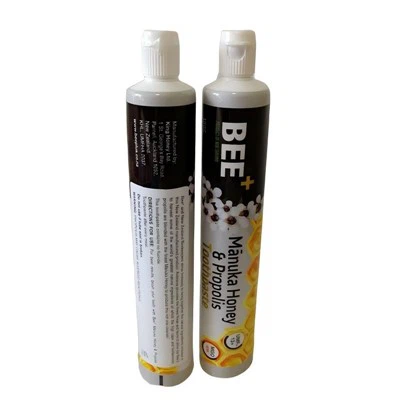
If you’re an industrial manufacturer looking for laminated tubes that are built for durability, chemical resistance, and consistent performance, we’re here to help. We work with clients across industries to customize tube size, layer composition, nozzle type, and printing to fit your exact product needs, no matter how specific or demanding. Contact us to discuss your requirements, and we’ll be happy to provide samples, production timelines, and a tailored quote for your next order.
Food Tubes Laminted REFERENCES
- Huber, R. (2018). Laminated Packaging Materials for Industrial Applications. Journal of Packaging Science and Technology, 27(3), 189-204.
- Smith, J. D. (2021). Precision Forming of Laminated Tubes for Specialty Chemical Packaging. Industrial Packaging Monthly, 14(7), 45-52.
- National Institute of Standards and Technology. (2020). Performance Standards for Flexible Industrial Packaging Tubes. NIST Special Publication 1203.
- Lee, S., & Patel, M. (2019). Barrier Layer Technology in Laminated Tubes for Corrosive Industrial Products. Packaging Engineering, 40(10), 33-39.
Shandong Bozhi Packaging Materials Co., Ltd.
As one of the leading laminated tube for industrial manufacturers and suppliers in China, we also support customized service. Please feel free to wholesale high quality laminated tube for industrial for sale here from our factory. For price consultation, contact us.
Address: Jinxinyuan, Heping Road, Zhangdian District, Zibo City, Shandong Province
E-mail: pharmapackaging@hotmail.com
WebSite: https://www.bozepackaging.com/
