As a niobium products supplier, I often get asked by new clients—whether manufacturers of aerospace components, superconducting magnets, or specialty steel alloys—how the niobium they rely on makes its way from raw ore to the precision parts they order. It’s not a process that many people outside our industry know about, and it’s a journey that balances rigorous science, careful material handling, and decades of refining to get the purity and consistency we need for end products. Let me walk you through that process step by step, from the mine to the finished component, and show why that expertise matters when you’re sourcing niobium for critical applications. Niobium Products
First, it starts with niobium ore, though you might hear it called columbite in some geological circles—those two names are often used interchangeably, rooted in early 19th century discoveries that confused the two elements. Niobium doesn’t appear in nature in its pure metal form; it’s locked in mineral deposits that are usually found in pegmatite veins or alluvial deposits, often alongside other heavy minerals like tantalum, tin, or rare earth elements. Most of the world’s niobium supply comes from a small number of mines, primarily in Brazil and Canada, though smaller operations exist in Africa and Australia.
The first step is beneficiation, where the ore is processed to separate niobium minerals from waste rock (gangue). Raw ore is crushed and ground into a fine slurry, then goes through a series of physical separation techniques. Gravity separation works first, since niobium minerals are denser than most waste material, pulling them out as a heavy concentrate. Then comes flotation, where chemicals are added to make niobium particles stick to air bubbles, which rise to the surface and are skimmed off, while unwanted minerals sink. Finally, magnetic separation is used to separate niobium from tantalum—another metal often found with it—since niobium is less magnetic than tantalum. What comes out of this step is a concentrate that’s around 60-70% niobium pentoxide (Nb₂O₅), the oxide form of niobium we’ll work with next. This stage is critical because even a small amount of residual impurities like iron or titanium can throw off later processing steps, so precision here is non-negotiable.
Next is the conversion of niobium oxide into pure niobium metal, and this is where it gets technical. Niobium has a very high melting point (around 2,468°C, or 4,474°F), which makes traditional melting or smelting tricky, and it’s also highly reactive with oxygen, nitrogen, and carbon at high temperatures—so we can’t just melt it in an open furnace. The most common method we use at our facility is the aluminothermic reduction process, though we also use a more modern method called potassium fluoroniobate reduction for ultra-high-purity niobium needed for superconducting applications.
For aluminothermic reduction, we mix the niobium oxide concentrate with aluminum powder and a small amount of iron (as a flux) to lower the reaction temperature. The mixture is loaded into a refractory-lined reactor, and a trigger (usually a magnesium ribbon) is lit to start an exothermic reaction. The heat from the reaction (reaching over 2,000°C) reduces the niobium oxide to molten niobium metal, while the aluminum combines with oxygen to form aluminum oxide slag, which floats on top of the metal and is later removed. What’s left is a niobium-aluminum alloy, which we then crush and leach with acids to remove residual aluminum and iron, resulting in a niobium powder that’s around 95-98% pure. For higher purity, we move to the potassium fluoroniobate method: niobium oxide is first dissolved in hydrofluoric acid to form potassium fluoroniobate (K₂NbF₇), which is then reduced with sodium metal in a sealed steel reactor. This produces a much finer, purer niobium powder—up to 99.9% pure—ideal for applications like MRI magnets or particle accelerators.
Once we have niobium powder, the next step is to shape it into workable forms, because we can’t machine or weld powder directly. The powder is first pressed into briquettes or ingots using high pressure (usually 10,000 to 50,000 psi) in a die. The green (unprocessed) compacts are then sintered in a high-vacuum furnace at temperatures between 1,200°C and 1,600°C. Sintering fuses the powder particles together without fully melting the metal, creating a solid, porous preform. To get fully dense niobium—free of voids that would weaken parts or compromise performance—we use electron beam melting (EBM) or vacuum arc melting (VAM). For EBM, a high-energy electron beam is focused on the sintered preform in a vacuum chamber, melting it into a liquid that solidifies into a dense ingot. For larger pieces, vacuum arc melting uses an electric arc between the niobium preform and a water-cooled copper crucible to melt the metal, again in a vacuum to prevent oxidation. This gives us a niobium ingot that’s 99.95% pure or higher, ready for further processing.
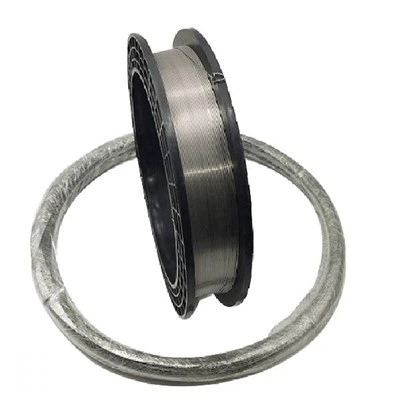
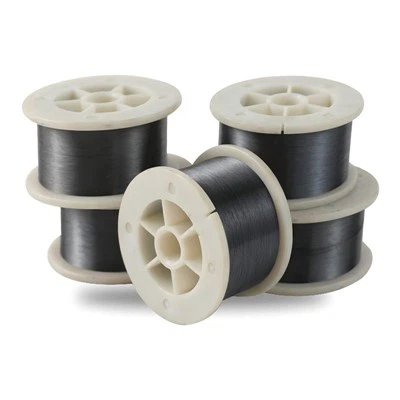
From there, we shape the ingot into the specific products our clients need, which can range from thin foils and wires to rods, plates, and custom machined parts. The first shaping step is usually forging: the ingot is heated to around 1,100°C in a controlled atmosphere furnace (to avoid oxidation) and hammered or pressed into a billet with the desired dimensions. For foils and thin sheets, we use rolling: the billet is passed through a series of rotating rollers, gradually thinner each pass, until we reach thicknesses as low as 0.01 mm. For wires, drawing is used: the billet is pulled through a die with a progressively smaller opening, reducing its diameter while maintaining its strength. Throughout each of these shaping steps, we closely monitor the purity of the niobium—even a trace amount of oxygen can make the metal brittle, so we maintain strict control over furnace atmospheres and avoid contact with air at high temperatures.
After shaping, we perform a series of finishing processes to meet our clients’ exact specifications. For custom parts, this often includes precision machining: turning, milling, or EDM (electrical discharge machining) to create complex shapes with tight tolerances (sometimes as small as 0.001 mm). We also offer surface treatments, like electropolishing, which removes a thin layer from the part’s surface to eliminate machining marks and improve corrosion resistance—critical for niobium used in chemical processing equipment. For superconducting niobium, we sometimes perform a process called heat treatment in a high-vacuum or inert gas atmosphere to relieve internal stresses and adjust the crystal structure, which boosts its superconductivity at low temperatures.
What many clients don’t realize is that niobium’s unique properties—high strength, excellent corrosion resistance, superconductivity, and a low thermal neutron capture cross-section—make it one of the most versatile specialty metals, but those properties depend entirely on how carefully we process it. A small mistake in the beneficiation step, or a tiny air leak during sintering, can ruin a batch, which is why every step of our process is quality-controlled at multiple points. We test every batch of niobium powder for purity using X-ray fluorescence (XRF), every ingot for density and uniformity using ultrasonic testing, and every finished part to ensure it meets the mechanical and chemical requirements of its intended use.
As a niobium products supplier, our work doesn’t end with shipping a part. We work closely with clients to understand their specific needs, whether they’re developing a new aerospace component that needs to withstand extreme temperatures, a superconducting magnet for a research lab, or a high-strength alloy for structural steel. We can adjust our processing steps—from refining purity levels to custom shaping methods—to deliver exactly what they need, because we know that when a part is made with niobium, it’s usually in a critical application where performance can’t be compromised.
If you’re sourcing niobium products for your next project, or if you have questions about our processing capabilities and how we can support your needs, I encourage you to reach out to our team to discuss your requirements. Whether you need a small prototype or a large volume of custom niobium parts, we have the expertise and equipment to deliver high-quality, consistent products that meet your specifications.
Molybdenum Alloy References
- "Niobium: Mineral Processing and Extraction". International Niobium Association.
- Rowe, E. G. (2008). Specialty Metals Processing: Principles and Practices. Elsevier.
- "Superconducting Niobium Fabrication for Particle Accelerators". Journal of Materials Processing Technology, vol. 211, no. 12, pp. 2010-2018.
- "Niobium Oxide Reduction Methods: A Comparative Review". Metallurgical and Materials Transactions B, vol. 45, no. 3, pp. 897-905.
Address: Wangjing Science and Technology Park, Guangshun North Street, Chaoyang District, Beijing
E-mail: sales@moly-tungsten.com
WebSite: https://www.moly-tungsten.com/
